
Machina Economica III: diffusion dilemma
where is my robot butler?

This is an extract from my Article in the forthcoming print issue of Arena Magazine. You can read the full version here.
On the sun-baked plains of the American Midwest in 1892, a revolution was loudly sputtering to life: the tractor, an engine which signaled the end of the era of animal power and the beginning of the age of machine power. This machine was not just a piece of equipment; the tractor was a manifestation of an exponential shift in energy density, from animal metabolism to coal burning, empowered by discoveries in thermodynamics. But diffusion of the tractor, screeching across the horizon, took much longer than expected.
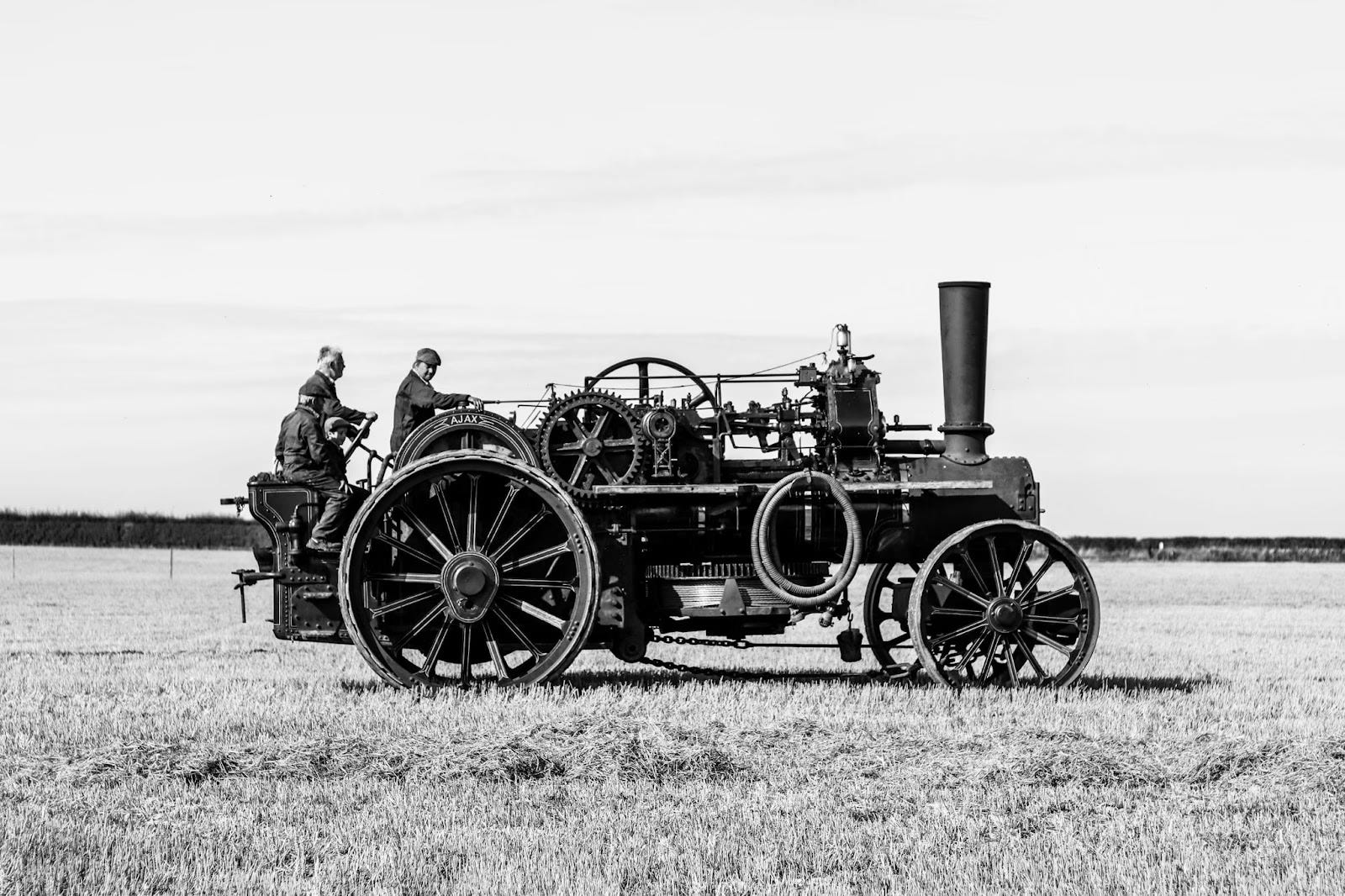
At the beginning of the 20th century, 40% of American workers were farmers, comprising 15% of the economy. The tractor created a significant reduction in marginal unit cost of food, freeing approximately three acres of cropland per horse previously needed for feed. Yet by 1920, only 4% of American farms had a tractor. This is the ‘diffusion deficit’: the difference between the availability of an innovation and its diffusion throughout its potential markets. But once the tractor diffused, however, the effects were enormous: agricultural mechanisation would eventually raise American GDP by 8%. Time and time again similar patterns have shown up in the spread of technologies through the economy, as we sit on the precipice of yet another industrial shift we may yet learn from the past.
Diffusion Deficits
Technologists and scientists often equate technological innovation with immediate social and economic change. But just because a technology exists does not mean it will necessarily have a strong effect on society in the short run––even if the technology is profitable and sensible to adopt. The tractor was one of the most impactful innovations in recent centuries, but it took over 70 years for the potential of this technology to be realised at scale.
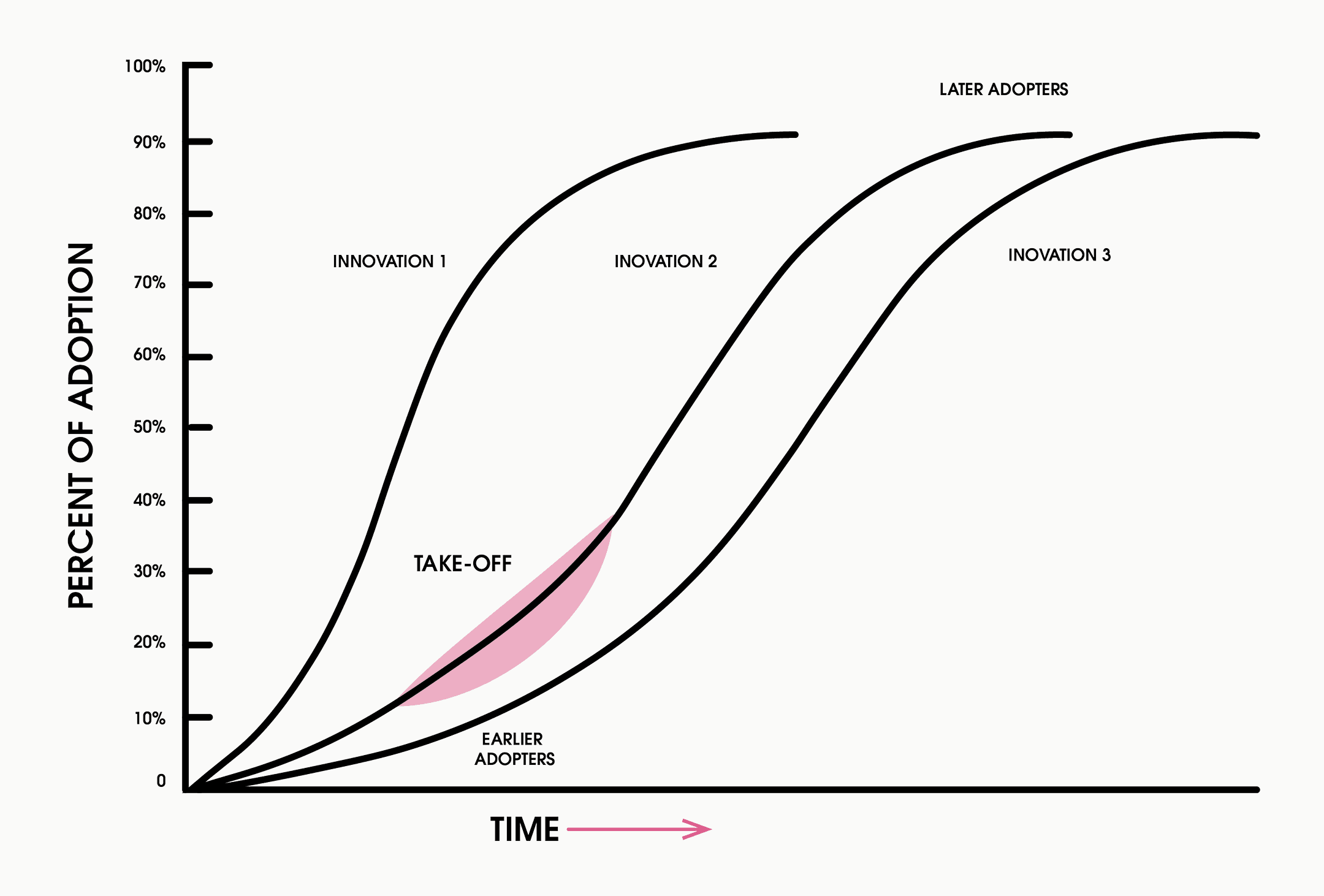
If we understand an “innovation” to be an idea, practice, or technology that is perceived as new, then “diffusion” is the process by which an innovation spreads throughout a population or social system over time. Everett Rogers first popularized the notion of “technological diffusion" in 1962, when he observed that adoption of a new innovation follows a predictable patterns…
This is an extract from my Article in the forthcoming print issue of Arena Magazine. You can read the full version here.
For the follow-up to this on Chinese industrial strategy you can see here.